


Scientific Publications
COgITOR_Scientific publications and events at M54
Events
M54 COgITOR technical updates
The COgITOR project has reached its end, with the successful integration and testing of the prototype of the first Colloidal Cybernetic System (CCS) in Genova, Italy. This convergence marks the last milestone, achieved through the joint efforts of Istituto Italiano di Tecnologia, the University of the West of England, Empa, École Polytechnique Fédérale de Lausanne, PlasmaChem and PNO Innovation. The CCS embodies a new paradigm in system engineering and unconventional computing, integrating a liquid-based memory and computing core driven by microwave impedance spectroscopy, powered by thermogalvanic energy harvesters, featuring piezoresistive soft pressure sensors, and a self-healing polymeric skin.
Recent integration and testing activities have demonstrated that the system is not only operational but exhibits intrinsic robustness at both material and architectural levels. The colloidal computing core maintains stable and reproducible behavior under a wide range of perturbations, including thermal, mechanical, and electromagnetic stimuli, confirming its fault-tolerant nature. At the same time, the self-healing skin enables recovery of integrity after mechanical damage, restoring system-level operation close to baseline conditions. Importantly, interference assessment tests have shown that sensing, energy harvesting, and computation can operate simultaneously without detrimental cross-coupling, validating the effectiveness of the system design.
The final testing campaign has focused on challenging the CCS under extreme environmental conditions, including ionising radiation, magnetic fields, high pressures and temperatures. The environmental conditions adopted in this work do not correspond to a single naturally occurring extraterrestrial environment, but rather to a compounded stress envelope inspired by multiple space-relevant scenarios. For example elevated pressures and moderate temperatures are representative of dense planetary atmospheres and subsurface niches (e.g., Venusian cloud layers or icy moon interiors), while high-energy particles are characteristic of deep space and planetary magnetospheres. Strong magnetic fields, although rarely co-located with such thermobaric conditions, are relevant in the vicinity of magnetized bodies.
The experiments have also highlighted current technological bottlenecks. In particular, failures associated with sealing, wiring, and ancillary materials indicate that future developments must address system-level engineering constraints rather than core functional principles. These results provide a clear roadmap for advancing CCS toward real-world deployment in demanding environments.
As the project concludes, COgITOR establishes a strong foundation for the future of liquid cybernetic systems, demonstrating that computation, sensing, and energy harvesting can be unified within adaptive, self-healing, and resilient architectures.
M36 COgITOR technical updates
The COgITOR project has reached a level of maturity which is particularly relevant in the field of computing with colloids. Never before the COgITOR project we could think about using a liquid to perform any sort of calculus, and now after opening such new route, the entire consortium is exploring the unprecedented possibilities of building logical gates, systems that can learn and remember, sensors and switches.
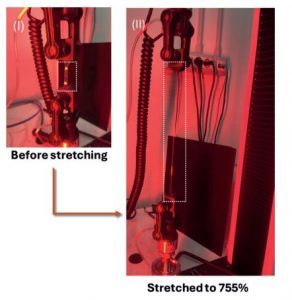
Different self-healing skins have been developed, focusing on combining soft polymers and nanoclay (Figure 1.1). These systems are designed to respond to external stimuli, such as heat, by introducing dynamic bonds into the molecular chains of the polymer (thermoplastic polyurethane), facilitating thermally activated reversibility. This means that when a polymer like this is damaged, it can easily recover its full shape and properties after being “healed” with a source of heat. Tests showed that as the healing temperature increased, the reaction rate of the reversible bond exchange also gradually increased, resulting in a faster healing process (Figure 1.2). This allowed the materials to regenerate and maintain their structural properties after damage. Additionally, the interaction between the nanoclay and thermoplastic polyurethane polymer matrix demonstrated enhanced thermal resistance and robust mechanical properties for the skins (Figure
1.3). For our robot skin, we need to find a strong material that survives also in harsh conditions, yet maintaining its softness. These skins were strategically developed to be 3D printed, enabling the creation of complex objects, such
as a soccer ball composed by hexagonal and pentagonal tiles, to protect functional colloids.
Thanks to this combination of self-healing, thermal resistance, and mechanical strength, the useful life of these systems can be extended, and the range of conditions where the COgITOR prototype will survive will be consequently broad. Simultaneously, other composites based on thermoplastic polyurethane and plasmonic nanoparticles are being
developed to enhance the self-healing process further: our idea is to use light instead of heat to induce the healing, once the polymer has been damaged. This will be a fast and cheap healing method, featuring important fall-outs in the real world applications: imagine to heal scratches on your car by shining a laser pointer in a few seconds! Find out more in our dedicated newsletter.
Figure 1.1. Self-healing skins
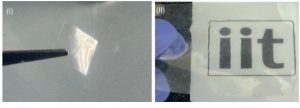
Figure 1.2. Image showing the self-healing process of a crack in the nanoclay/polyurethane composite skin
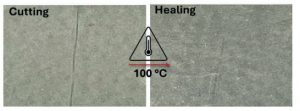
Figure 1.3. Nanoclay/polyurethane composite skin under tensile test
COgITOR updates M24
The COgiTOR project has achieved M24, and significant technical advancements have been accomplished through the collaborative efforts of our technical partners:
- A measurement system to assess the capability of commercial colloids to respond as expected in terms of Radio Frequency (RF) to DC stimulation was developed: it allowed us collecting around 10 GB of raw measurements of different colloidal suspensions. These measurements led to the assessment of the capabilities of the materials to memorize information and computing. Based on the first results, we have started developing a dedicated integrated circuit for measuring the colloids state changes and implement, in an aggressive miniaturized and simplified fashion, the techniques used in the set-up but with very few hardware components to favour integration in a final set-up.
- The chip is currently under design stages, and it will implement RF/analog and mixed-signal techniques and circuit solutions to achieve the read-out of the material state, thus providing a tool for understanding the behaviour of the colloids.
- We obtained fundamental preliminary results on implementation of reservoir computing in colloid systems, achieving very nice demonstration of in memory computing, of liquid analogue memory equivalent to 6 bits of liquid state artificial recurrent neural network. Such results represent a unique achievement in science.
- Alternative energy supply in the soft cybernetic system were explored. We designed thermomagnetic and photothermal energy converter models by 3D printing and used those for the investigation of the heat transfer in ferrofluids.
- Several magnetic and infrared absorbing nanomaterials on the base of ferro magnetic liquids with different susceptibility and pyromagnetic effects were developed and supplied to the beneficiaries. These technologies and materials will lay the basement for computing subsystems used in later tasks.
- The development of self-healing soft skins for protecting the functional colloids has advanced improving the mechanical and self-repairing properties as well as providing energy to the autonomous liquid robot.
In parallel the dissemination, communication and exploitation activities were carried out, reaching important milestones:
- A Systematic Stakeholder Analysis was carried out by CTECH. The identified stakeholders were invited to participate in an online survey, designed to measure their characteristics, e.g., their interest, attitude, influence, and knowledge relevant for the project.
- A patent was deposited by IIT on the7th November 2022: “Sistema e metodo per la memorizzazione di informazioni”, reference n° 102022000022839, date of deposit, inventors: A. Chiolerio and M. Crepaldi.
- PLASMACHEM has performed the synthesis of several types of nanoparticles including a new material that was characterized and will be included into the portfolio of the company and sold worldwide through the existing catalogue channel.


